3. Accelerometer Designs
The basic function, i.e. the conversion of mechanical acceleration into an electric signal, is identical for all kinds of piezoelectric accelerometers. The reason for using different piezoelectric systems is their individual suitability for various measurement tasks and their varying sensitivity to environmental influences.
We use three different mechanisms for the mechanical-to-electrical conversion. Our type codes “KS”, “KD” and “KB” are derived from these designs.
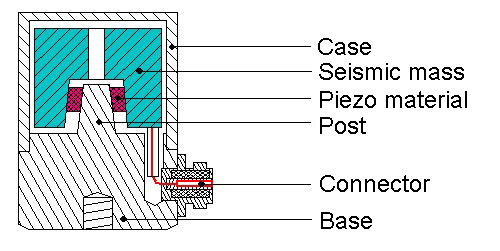
Shear system (“KS”)
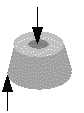
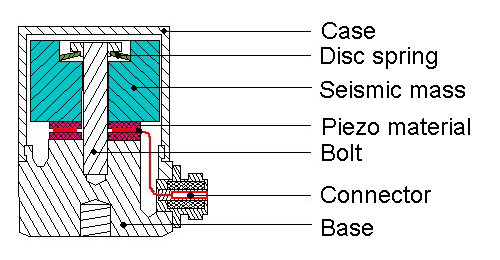
Compression system (“KD”)

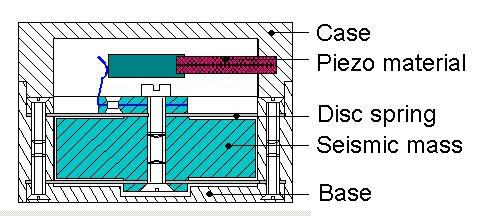
Bending system (“KB”)
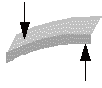
The following table summarizes the advantages and disadvantages of these three designs:
| Shearing “KS…” | Compressing “KD…” | Bending “KB…” | |
| Addvantages | Low temperature transient sensitivity Low base strain sensitivity | High sensitivity-to-mass ratio Robustness Technological advantages Cost efficient manufacturing | Best sensitivity-to-mass ratio |
| Disadvantages | Lower sensitivity-to-mass ratio | High temperature transient sensitivity High base strain sensitivity | Fragile Relatively high temperature transient sensitivity |
Shear design is applied in the major part of modern accelerometers due to its better performance.
The following illustrations show the three designs in existing accelerometers.